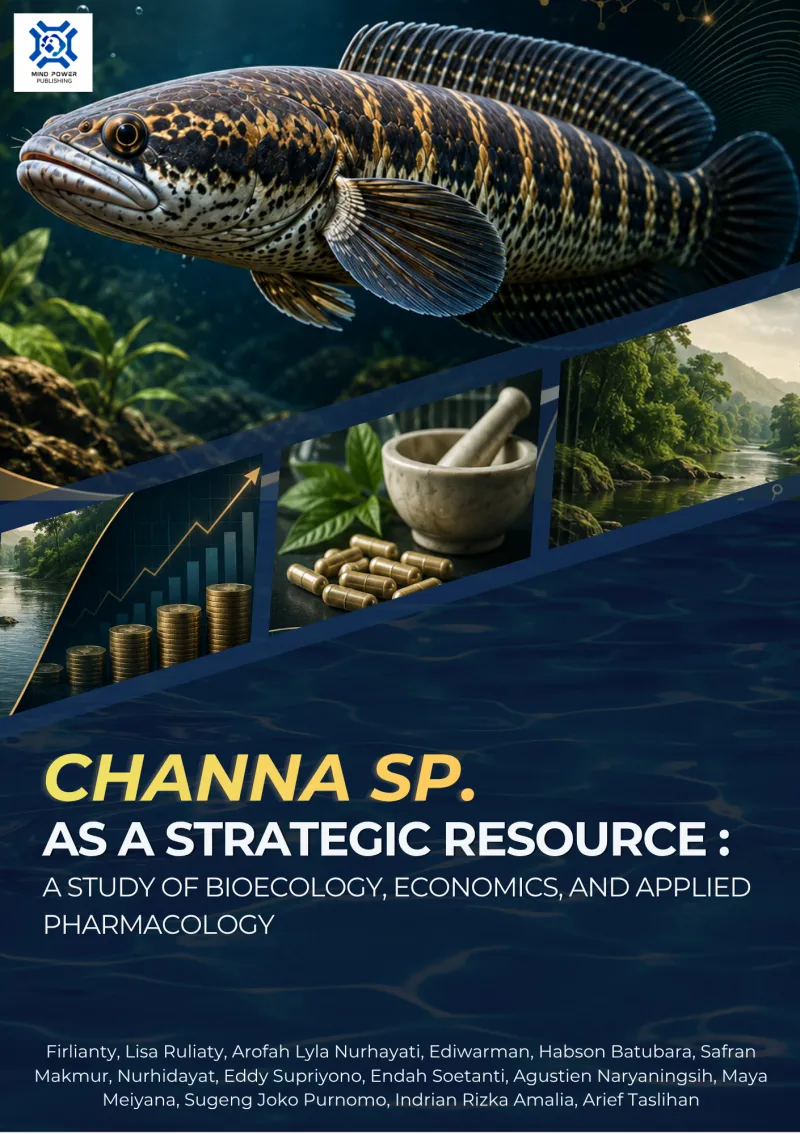
By expressing gratitude to the presence of Allah SWT, for the abundance of His grace and guidance, the writing of the book entitled Channa Sp. As a Strategic Resource: Bioecological, Economic, and Applied Pharmaceutical Studies can be completed. This book discusses the urgency of studying channa sp. in the perspective of bioecology and economics, taxonomy and diversity of channa sp. species, morphological and physiological characteristics of channa sp., habitat, ecological distribution and ecological role of channa sp. in aquatic ecosystems, behavior and ecological adaptation strategies, fish reproduction and seed maintenance, analysis of economic potential and value chains, channa sp.-based product innovation, bioactive content and pharmaceutical potential, fish health and disease management as well as biology, capture, utilization and management of channa sp.
Diversity of fish family species Channidae known as “snakeheads” is a predatory or predatory fish and has carnivorous characteristics. The main food of fish of the family Channidae are freshwater shrimp, fish, crabs, frogs and worms as well as various insects that live in the water. In the Kalimantan region, the types of fish of the family Channidae are often found in inland swamp areas, and live on the bottom of shallow waters. Research by Courtenay and Williams (2004) states that snakeheads looking for food at dusk and dawn.
The snakehead fish and its relatives are included in the group of old world animals, and their main habitat is the Asian region (genus Channa) and Africa (genus Parachanna). All members of the genus Channa And Parachanna reaching ± 30 types. Kottelatet al.(1993) reported that in the Western Indonesian and Sulawesi regions there are 10 species, while in Central Kalimantan there are several species of fish dominated by relatives of the snakehead fish.





Ulasan
Belum ada ulasan.